Not so long ago, I was knee-deep in toddler tantrums, negotiating bedtime with tiny humans and fighting imaginary monsters under the bed. Back then, I naively believed that parenting would eventually get easier.
And whenever I dared to express that hope, more experienced parents would give me a knowing smile and say:
“Just wait until they’re teenagers!”
Ah, yes. The teenage years. That mysterious stage of parenting we’re apparently supposed to dread.
As a mum of three boys, I’m mentally preparing myself for smelly armpits, permanently messy bedrooms, dramatic eye rolls and the occasional grunt in response to a perfectly reasonable question.
But here’s the thing: I’m not particularly worried about the mess or the attitude.
What I really want to understand is what happens inside our children’s brains and bodies during adolescence, why their behaviour changes so dramatically, and how we can support them through this extraordinary stage of development.
Because as I’ve learned from Dr Dan Siegel, adolescence isn’t just a difficult phase to survive. It’s a remarkable window of opportunity for growth, learning and becoming the person you’re going to be.
And I don’t want to miss it.
So, with my eldest son entering his preteen years (and already offering occasional previews of teenage attitude), I decided to do what I usually do when faced with a new parenting challenge.
I turned to books.
Now, I’ve read a lot of parenting books over the years. Many have given me a solid foundation in child development, emotional regulation and positive parenting.
But these three books genuinely changed how I think about raising teenagers.
Here are my three favourite books on parenting teenagers, and why I think every parent of a preteen or teen should read them.

1. Brainstorm by Daniel Siegel
If you’ve ever wondered why your perfectly sensible child suddenly seems to make questionable decisions, experiences emotions at full volume or treats their friends’ opinions as more important than yours, this book is a brilliant place to start.
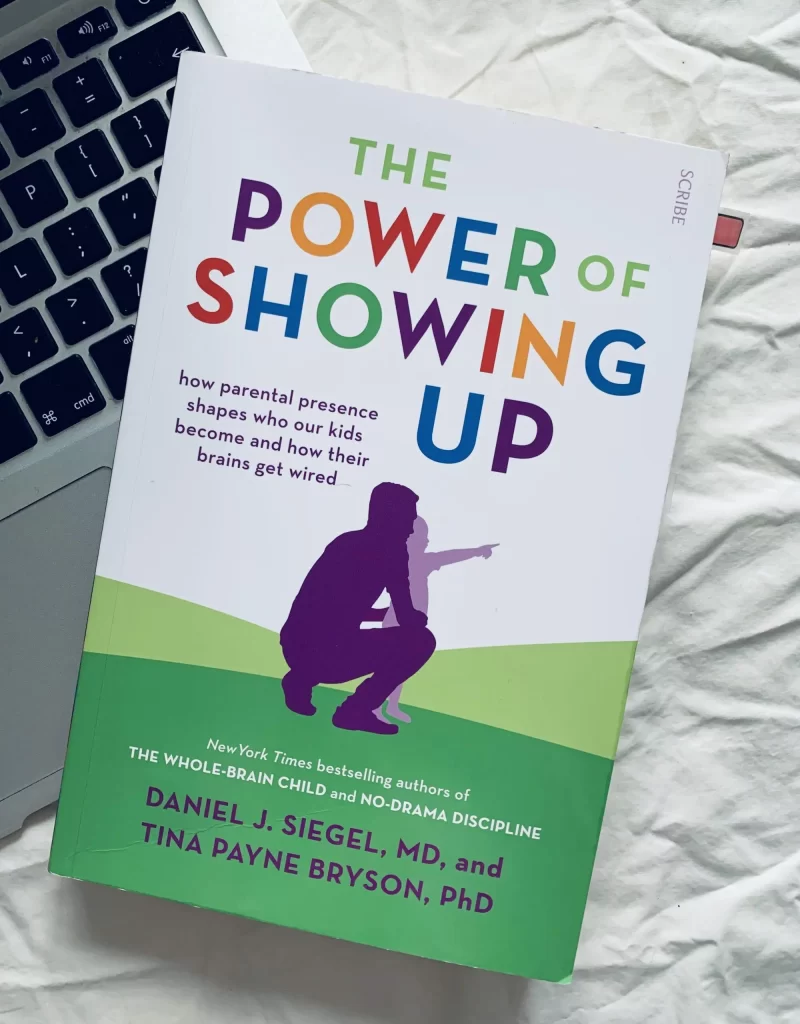
Dr Daniel Siegel, psychiatrist, neuroscientist and co-author of some of my favourite parenting books (The Whole-Brain Child, No-Drama Discipline and The Power of Showing Up), takes us on a fascinating journey inside the adolescent brain.
And what a journey it is.
In Brainstorm, Siegel challenges some of the biggest myths about teenagers, including the idea that adolescence is simply a period of raging hormones, irrational behaviour and unnecessary drama.
Instead, he explains how the teenage brain is undergoing an extraordinary period of remodelling.
The very changes that can make teenagers more impulsive, emotional and drawn to risks also fuel their creativity, curiosity, passion and desire to explore the world.
In other words, many of the things that make teenagers challenging to parent are also the qualities that help them grow into independent adults.
I found this perspective incredibly refreshing.
Rather than asking, “How do I stop my teenager from behaving like this?”, Siegel encourages us to ask, “What’s happening in their developing brain, and how can I help them use these changes to their advantage?”
The book is written for both parents and teenagers, and it’s packed with practical exercises for developing self-awareness, emotional regulation and stronger relationships.

2. The Emotional Lives of Teenagers by Lisa Damour
If the emotional rollercoaster of adolescence makes you nervous, Lisa Damour’s The Emotional Lives of Teenagers is the book you need on your bedside table.
Damour is a clinical psychologist and a leading expert on adolescent development, and her book is an absolute gem.
What I love most about it is how reassuring it is. We live in a world where parents are increasingly worried about their children’s mental health. And while those concerns are understandable, it’s easy to start interpreting every difficult emotion as a sign that something is wrong.
Damour offers a much-needed perspective.
Having difficult feelings doesn’t mean a teenager is struggling with their mental health. It means they’re human.
Sadness, frustration, anxiety, disappointment and anger are all normal parts of life. And adolescence, with its enormous social, emotional and developmental changes, naturally comes with plenty of them.
And our job as parents isn’t to eliminate uncomfortable feelings or rush in to fix every problem. It’s to help our children learn how to experience, understand and manage those emotions.
One of the most valuable parts of the book is Damour’s guidance on distinguishing between typical teenage emotional turbulence and signs that a young person may need professional mental health support.
She also offers practical advice on how to listen, respond and stay connected when emotions run high. And sometimes, the most helpful thing we can do is surprisingly simple: listen without immediately offering a solution.
As someone who naturally likes to solve problems (preferably yesterday), this was a particularly useful reminder.

3. 10 to 25 by David Yeager
Now, understanding your teenager’s brain and emotions is one thing. But knowing how to actually communicate with them so they listen, cooperate and take responsibility?
That’s a whole different parenting challenge.
And this is where David Yeager’s 10 to 25 comes in.
Yeager is a professor of psychology at the University of Texas at Austin who has worked alongside influential researchers such as Carol Dweck, Angela Duckworth and Greg Walton.
His research explores how relatively small changes in the way adults interact with young people can influence their motivation, behaviour and wellbeing.
In 10 to 25, he challenges what he calls the Incompetence Model – the assumption that teenagers make poor decisions because they lack the maturity, discipline or skills to do better.
Instead, Yeager argues that young people are particularly sensitive to status and respect. They want to be taken seriously. They want autonomy. They want to feel capable and valued.
And when adults treat them as incompetent, controlling them through lectures, threats or constant correction, teenagers often push back.
Not necessarily because they’re difficult, but because they’re trying to protect their growing sense of independence.
The alternative?
The mentor mindset.
It’s an approach that combines high expectations with genuine respect, support and belief in a young person’s potential.
Instead of acting like a boss who demands obedience, you become a mentor who helps them rise to the challenge.
The book is full of fascinating research, real-life stories and practical strategies that parents, teachers and coaches can start using straight away.
I’ve already begun experimenting with the mentor mindset at home, and I’ve noticed a difference in how my children respond.
The Bottom Line: Parenting Teenagers Is About More Than Surviving the Teenage Years
If there’s one thing these three books have taught me, it’s that we need to rethink the story we tell ourselves about adolescence.
Yes, there will be mood swings, questionable decisions, arguments and probably more dirty socks than I care to imagine.
But there will also be extraordinary opportunities.
Opportunities to help our children discover who they are, develop their strengths, learn to navigate difficult emotions, make independent decisions and build the skills they’ll need for adult life.
And perhaps the biggest shift is in how we see our role as parents.
We’re gradually moving from being the people who manage almost every aspect of our children’s lives to becoming the mentors who guide, support and empower them.
That’s not always an easy transition. Especially when you’ve spent the last decade reminding someone to brush their teeth.
But it’s an important one.
So, if you’re approaching the teenage years with a mixture of curiosity, excitement and mild panic, I’d highly recommend adding these three books to your reading list.
They won’t guarantee a drama-free adolescence (sorry!), but they’ll help you understand your teenager better, respond more thoughtfully and build the kind of relationship that can grow stronger as your child grows up.
And who knows? Perhaps one day, when another exhausted toddler parent tells you they’re hoping things will get easier, you’ll resist the temptation to say, “Just wait until they’re teenagers!”
Instead, you might say:
“You’ve got so much to look forward to.”
Warmly,
Irina