

About David Yeager
David Yeager, PhD, is a professor of psychology at the University of Texas at Austin and a cofounder of the Texas Behavioral Science and Policy Institute. He is best known for his research conducted with Carol Dweck, Angela Duckworth, and Greg Walton on short but powerful interventions that influence adolescent behaviours such as motivation, engagement, healthy eating, bullying, stress, mental health, and more.
He has consulted for Google, Microsoft, Disney, and the World Bank, as well as for the White House and the governments in California, Texas, and Norway. His research has been featured in The New York Times Magazine, The New York Times, The Wall Street Journal, Scientific American, CNN, Fox News, The Guardian, The Atlantic, and more.
Yeager is the only developmental scientist to have won all three of the major awards for early career contributions to developmental psychology, and the only to have won “best paper” awards in four different fields: behavioral science, social psychology, developmental psychology, and education. Clarivate Web of Science ranks Yeager as one of the top 0.1 percent most influential psychologists in the world over the past decade. Prior to his career as a scientist, he was a middle school teacher and a basketball coach. He earned his PhD and MA at Stanford University and his BA and MEd at the University of Notre Dame.
About The Book
“What is the important change in ten-year-olds that continues to shape their motivation at least until their midtwenties? It is the motivation to experience feelings of status and respect. Neuroscientists have shown that during puberty the brain becomes attuned to social status and respect.
It craves socially rewarding experiences, sometimes even before the rest of the body has shown the other major signs of puberty. The onset of puberty – specifically gonadarche, which brings us to reproductive maturity and regulates hormones such as testosterone and estradiol – has a powerful effect on the reward-seeking regions of the brain (such as the region called the nucleus accumbens, which is rich in dopamine-receptive neurons). This gives our brains cravings for experiences such as pride, admiration, and respect and makes our brains averse to socially painful experiences, such as humiliation or shame. From the onset of puberty until we take on adult roles in society, we develop appetites for deeper and more meaningful experiences of respect – or, as the cultural anthropologists call it, earned prestige.
Any time young people interact with socially powerful people – managers, parents, educators, or coaches -status and respect come to the foreground. Because young people feel sensitive to differences in status, they are subtly reading between the lines with each thing we say, trying to interpret the hidden implications of our words, to find out if we are disrespecting or honoring them. This creates a pervasive disconnect between what adults intend to communicate when we speak and what young people can hear from our words. […] We say one thing, they hear another, and we fight over that misinterpretation, fueling one of the most common forms of conflict between the generations.”
I heard David Yeager speak about this research on a podcast and ordered the book immediately.
Yeager, a professor of psychology at University of Texas at Austin, has worked alongside names like Carol Dweck, Angela Duckworth, and Greg Walton. Together, they’ve developed small, targeted interventions that create great shifts in adolescent behaviour – from motivation and engagement to bullying, stress, and mental health.
In 10 to 25, Yeager challenges the “Incompetence Model” – the idea that teens make bad decisions because they lack skills or discipline – and replaces it with something far more useful: a model rooted in status, respect, and identity.
The most powerful idea in the book? The mentor mindset. A leadership approach – whether you’re a parent, teacher, or coach – that aligns with a young person’s deep need for status and respect. And the best part: it’s practical. Simple shifts in how you communicate can dramatically change how they respond.
Yeager shares a lot of the compelling research, real life stories, and the strategies that work. I’ve already started using them – and the difference is noticeable.
This book is packed with insights. Here, I’ll break down a few of the most powerful ones.
Let’s dive in.
Key Insights
Give Feedback Wisely
“In 2014 I published a scientific experiment with Geoffrey Cohen (and others) on a simple but effective solution to the mentor’s dilemma. We called it wise feedback. We had instructors be critical with their feedback but accompany that criticism with a clear and transparent statement about the reason they were giving that feedback—namely that they believed the student could meet a high standard if they got the right support. So-called wise feedback is wise (or attuned) to the predicament of young people who don’t want to be held to an impossible standard and who also don’t want to be talked down to. […]
We were hoping that the wise feedback would motivate students in the treatment group to work harder on their revisions. But even we were surprised by how strongly they responded. When students received the wise-feedback note, they were twice as likely to revise their essays: 40 percent of students in the control group revised their essays, but 80 percent did in the treatment group. The next year, when we ran the study with new students in the same teachers’ classes, we required all students to revise their essays. We wanted to see if receiving the wise-feedback note would encourage the students who received it to push themselves to do better.
Again, it worked. We found that students made more than twice as many of the teachers’ suggested corrections, from 2.2 in the control to 5.5 when they got the wise-feedback treatment note.”
Right from the start, Yeager introduces us to the concept of the mentor’s dilemma – the challenge every parent, teacher, coach, or leader eventually faces: How do you push young people toward higher standards without discouraging them or making them feel judged?
Many professors in Yeager’s research faced exactly this problem. They gave students detailed feedback on how to improve their essays, yet many students ignored the comments and never revised their work. The feedback was technically helpful, but emotionally ineffective. Students often interpreted criticism as proof that they weren’t capable enough.
To solve this problem, Yeager teamed up with Geoffrey Cohen and other researchers to test a surprisingly simple intervention called wise feedback.
The researchers asked seventh-grade students to write essays about their personal heroes. Teachers then filled the essays with critical comments and suggestions:
“Add a comma here. Explain this idea further. Rearrange this sentence.“
But before returning the essays, the researchers attached one of two handwritten notes from the teacher.
One group received a neutral message:
“I’m giving you these comments so that you’ll have feedback on your essay.”
The second group received what Yeager called wise feedback:
“I’m giving you these comments because I have very high standards and I know that you can reach them.”
That small shift changed everything. The students who received the wise-feedback note were twice as likely to revise their essays. Why? Because the message behind the feedback mattered just as much as the feedback itself.
Young people are incredibly sensitive to status, respect, and belonging. They constantly ask themselves: Does this adult believe in me? Am I being judged? Do they actually think I’m capable?
Wise feedback answers those fears directly. It combines two things young people deeply need:
High standards (“I expect a lot from you.”)
High belief (“And I know you can do it.”)
Without high standards, feedback feels patronizing. Without belief, feedback feels crushing. But together, they create motivation.
This idea reaches far beyond classrooms. It applies directly to parenting. Children respond differently when correction comes with confidence in their potential. A child who hears: “You’re better than this. I know you can handle it,” experiences correction differently than a child who only hears criticism.
Young people work harder when they feel that someone they respect sees greatness in them before they fully see it in themselves.
Parental Nagging Study
“Silk and Dahl’s team found that during the parental nagging, the regions of the brain that were associated with feeling intense emotions were on fire (more blood flow in the lentiform nucleus and the posterior insula), a neural signature showing that the youth were angry. […] The planning regions of the brain showed dramatically lower activation, suggesting there were no plans to do what the parent said. The “mind-reading” regions (the TPJ) showed lower activation, suggesting the youth weren’t trying to understand what their parents really wanted from them. Thus, the parental nagging triggered no listening or planning how to change – only fury and frustration.”
Let me guess, you’re not surprised. When teens feel attacked, controlled, or diminished, their brains shift into emotional defence mode. They stop listening. They stop reflecting. They stop planning how to improve.
Nagging may feel productive to parents because we are repeating an important message, but from the teen’s perspective, it often sounds like disrespect, disappointment, or lack of belief in their capability.
And that changes how the brain responds.
What’s fascinating is that the same researchers also tested what happened when mothers spoke in a calm, neutral, respectful tone instead:
“No accusations, no diminishment, no controlling demands. When that happened, the brain scans of the young people looked fine. They took in the information, and their thinking-and-planning brain regions were engaged. That is, their brains performed competently when their mothers talked to them neutrally. This is not the data you would see if their brains were biologically deficient. Instead, these are the results you’d expect to see if young people are highly responsive to whether adults speak to them disrespectfully.”
To sum it up, the way adults communicate can either activate cooperation – or shut it down. This is where Yeager’s Mentor Mindset becomes so valuable for parents.
Which naturally brings us to the next insight.
P.S.: While reading this book, I kept thinking about Nonviolent Communication by Marshall Rosenberg – one of the most practical guides on how to communicate effectively not only with kids, but with any human being. Check out our notes!
The Mentor Mindset
“Through years of observing and interviewing these leaders, I discovered what distinguished them from their less-successful colleagues: their mentor mindsets. This mindset is consistent with the lesson of the wise-feedback note, of course, but it is also more profound and nuanced. I called it a mindset because it was a worldview and suite of behaviors.”
This is one of the core ideas of the book. If we want to positively influence young people, motivate them effectively, and help them reach their potential, we need to adopt what Yeager calls the Mentor Mindset.
What makes this idea powerful is that it’s not just a parenting technique. It’s a way of seeing young people. A set of beliefs that shapes how we speak to them, guide them, discipline them, and support them.
Yeager builds on the work of researchers like Kurt Lewin, Diana Baumrind, and Kim Scott, who all arrived at a similar conclusion: The most effective leaders combine high expectations with high support.
That’s exactly what the Mentor Mindset is about. It closely resembles Authoritative Parenting (or wise parenting): warmth, respect, and support combined with clear standards and accountability.
Yeager contrasts this with three ineffective mindsets:
Enforcer — high standards, low support
Protector — high support, low standards
Apathetic — low support, low standards
The Mentor Mindset sits in the sweet spot: high standards + high support.
One of the best parts of the book is that Yeager shares simple, science-backed tools parents and teachers can use right away:
- Collaborative troubleshooting – keep high standards while helping young people solve problems together (it reminded me a lot Collaborative Problem Solving framework from The Explosive Child book by Ross Grene).
- Be transparent – before asking something, simply explain what you’re doing and why.
- Ask questions – guide reflection instead of constantly giving orders.
- Reframe stress – help teens see stress as a sign of growth, not failure (stress-is-enhancing mindset).
- Connect effort to purpose — show how daily effort links to something meaningful.
- Help them feel they belong — especially during struggle and failure.
Now let’s take a closer look at a couple of these tools in practice. And I strongly recommend to grab the book for more!
Reframe Stress to Build Resilience
“What ideas can replace our culture’s stress-is-debilitating belief? Crum has proposed a stress-can-be-enhancing belief. With this belief, stress can serve as a source of energy to fuel improved performance. With that belief, you can encourage people to lean into their stress—to use it as an asset. You’re not lowering standards. You’re just helping them see how their body’s stress can act as a resource to help them meet a higher standard.
When we teach a stress-can-be-enhancing belief, it can convince young people to see some forms of stress as a positive resource. What’s more, when we emphasize that stress can be enhancing, and it actually helps them do well, then they remember it. This mentor-mindset approach to stress-embracing stress, rather than running from it or getting crushed by it-helps impart a nugget of wisdom that reinforces resilience in the long run.”
I first heard this idea on Andrew Huberman’s podcast when he interviewed Alia Crum about the power of mindset. One of my favourite episodes.
The idea is simple: our beliefs about stress shape how we experience it and how our body responds to it.
If we believe stress is harmful and damaging, our body responds accordingly. But when we see stress as the body preparing us to focus, adapt, and perform, the experience changes completely. Stress becomes fuel.
I explained this idea to my boys once, and they came up with a brilliant metaphor: when a cheetah is hunting, it feels stress – “What if I don’t catch dinner tonight?” But that stress sharpens its focus, speed, and precision. The stress helps the cheetah perform.
And honestly, that’s such a powerful image for life. Before an exam, a difficult conversation, a competition, or a big challenge, stress is not always a sign that something is wrong. Sometimes it’s a sign that something important is happening and the body is mobilizing resources to help us rise to the occasion.
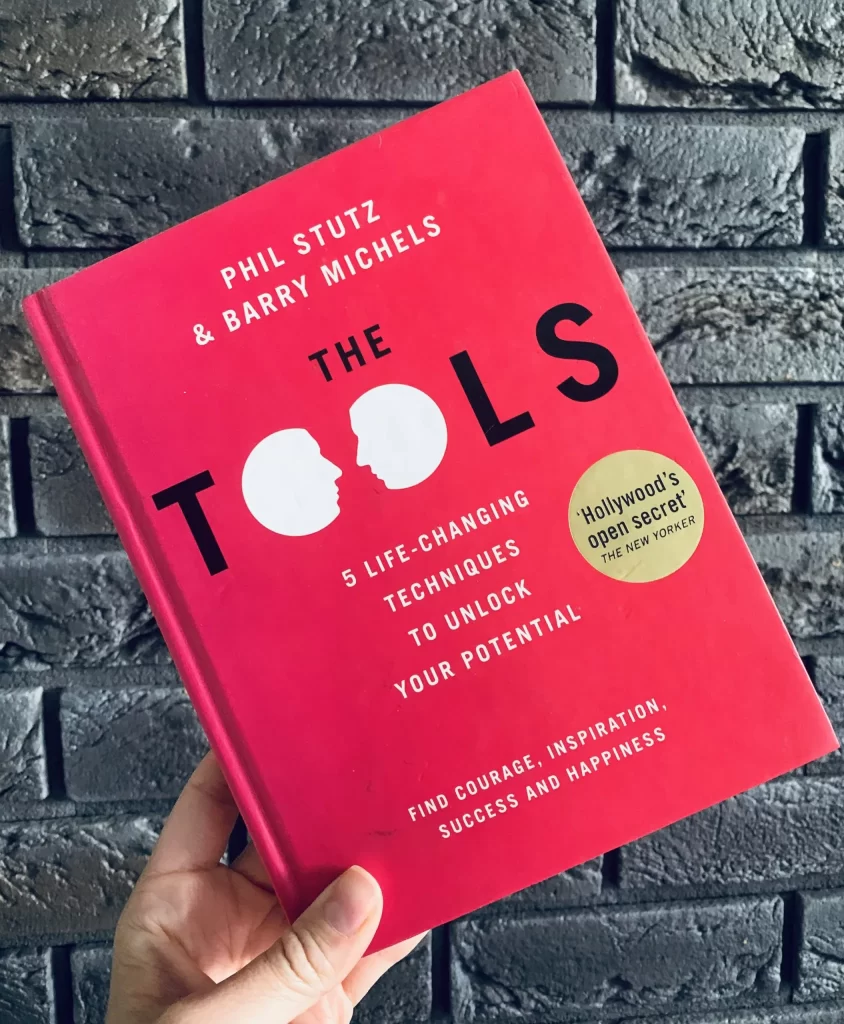
This also reminded me of The Tools by Phil Stutz – growth happens outside the comfort zone. Discomfort and stress is often the price of growth.
That’s something I’ve been reminding myself of a lot lately.
It also reminded me of Trevor Moawad’s idea from It Takes What It Takes – pressure is a privilege. If we reframe stress and pressure this way, we perform on a completely different level.
Tell Belonging Stories
“As it turns out, one of the most powerful ways to use a mentor mindset to support belonging is through storytelling. Storytelling is a powerful tool to help young people see the possibility for change and improvement when they face problems of belonging. […]
The story has four elements. The first block … explains that struggle is normal. This reassurance is meant to dispel the idea that students are alone in their struggles and therefore uniquely unsuited for college. The second block … provides an example of how change was possible. We don’t want to say, Everybody struggles, but then imply that the struggles will be endless. The third block … explains what actions students could take once they realized that change was possible. We’ve found students don’t always know the behaviors that can lead them to develop belonging; they think it just happens. The action steps help students be intentional. The fourth block … explains how those realizations and steps start a snowball effect. This is important because the story needs a happy ending, while also not overpromising that belonging concerns will evaporate overnight.”
In Chapter 9, drawing on Carol Dweck’s work on human needs and motivation, Yeager explains that from birth we all have two fundamental needs: to feel competent and to belong. During adolescence, these needs evolve into a deep desire for status and respect.
Young people want to feel that they matter, that they bring value to the group, and that they are accepted. When they feel competent and included, they gain what Yeager calls earned prestige – genuine respect that comes from contribution and growth. But when belonging feels threatened, confidence and motivation often collapse with it. That’s why helping young people feel that they belong is so important – at school, at home, in sports, and even at work.
And one of the most powerful tools for creating that feeling is storytelling. Humans are wired for stories. Stories help us make sense of struggle, possibility, and growth. Yeager’s framework works almost like a mini hero’s journey:
- struggle is normal,
- change is possible,
- here’s what you can do,
- and over time, things get better.
I’ve also noticed that these “me too” stories work beautifully with younger kids as well. When children hear stories about their parents (and other people) struggling, learning, failing, and eventually figuring things out, they stop feeling alone in their messy feelings. And that matters deeply. Because resilience is often built in those moments when a child realizes: “I’m not the only one who struggles, and I can do things to improve.”
Action Steps For You:
- Embrace the Mentor Mindset: Combine high expectations with high support. Young people thrive when they feel both challenged and deeply believed in.
- Practice Collaborative Troubleshooting: Replace lectures and control with curiosity and partnership: “Let’s figure this out together.” Guide your child to solve problems with you, not against you. Use these 3 steps: Step 1. Surface young people’s thinking. Step 2. Validate what they already got right. Step 3: Bridge to a better understanding.
- Reframe stress: Teach your child (or a young person you work with) the stress-is-enhancing mindset. Sometimes it’s the body preparing for top performance – help them lean into challenges instead of fearing them.
Quotes From The Book
“If young people’s brains seek social rewards – status, respect, prestige – and hope to avoid social failures-shame, humiliation, rejection-then we can turn these motivations into assets, not liabilities, for healthy development. Young people’s social sensitivities fuel an engine of learning that can help them fit into — or even change — their social surroundings.”
“The overwhelming failure of so many of our society’s youth-serving programs should be a sign that we need to look more deeply at our fundamental mental models about young people. We owe it to young people to ask the hard question: What if the problem has more to do with us-and how we treat the next generation – than it has to do with who they are?”
“There are three ways of trying to win the young. There is persuasion, there is compulsion, and there is attraction. You can preach at them: that is a hook without a worm. You can say, You must volunteer, and that is of the devil. You can tell them, You are needed. That appeal hardly ever fails.” (c) Kurt Hahn
“What seems like neurobiological incompetence to adults is often the result of a young person’s healthy pursuit of status and respect. When we honor that need, by using a mentor mindset rather than an enforcer or protector mindset, we can support young people’s healthy development and unlock their potential to shape the world for the better.”
“Parents can plan for future growth by finding ways to transfer responsibility to their children. One of the most frequent complaints I hear from parents is that they have to do everything for their children. But when you watch what parents actually do, they act like protectors, grabbing the metaphorical steering wheel the second their children veer off course. Such parents are like landscape architects who install flowering plants that die every winter and then complain about how much gardening they have to do each year. They’re using short-term strategies, so don’t be surprised if the benefits don’t last!”
“The enforcer mindset makes the generational divide worse. When we demand compliance without compassion, then young people feel like their perspectives are disrespected, which in turn causes many of the frustrating behaviors we complained about in the first place. The protector mindset fully concedes power and control to the next generation, and that isn’t right either. Young people may have valuable perspectives, but they’re often far narrower than the broad lens we develop with age, experience, and wisdom. A mentor mindset, however, can resolve the generational divide by learning from young people’s perspectives, while also aligning their ideas with what we already know is best for everyone’s long-term interests.”