About Lisa Damour
Recognized as a thought leader by the American Psychological Association, Dr. Lisa Damour co-hosts the Ask Lisa podcast, writes about adolescents for the New York Times, appears as a regular contributor to CBS News, and works in collaboration with UNICEF. She is the author of two New York Times best sellers, Untangled: Guiding Teenage Girls Through the Seven Transitions into Adulthood and Under Pressure: Confronting the Epidemic of Stress and Anxiety in Girls.
Dr. Damour serves as a Senior Advisor to the Schubert Center for Child Studies at Case Western Reserve University and has written numerous academic papers, chapters, and books related to education and child development. She maintains a clinical practice and also speaks to schools, professional organizations, and corporate groups around the world on the topics of child and adolescent development, family mental health, and adult well-being.
About The Book
“For teenagers, powerful emotions are a feature, not a bug. This has always been true, but these days it seems to be less widely understood. The past decade especially has been marked by a dramatic shift in how we talk and think about feelings in general and, in particular, about the intense emotions that characterize adolescence.
To put it bluntly, somewhere along the way we became afraid of being unhappy.
When I received my first license to practice clinically as a psychologist nearly thirty years ago, I had been steeped in a training program that embraced the full range of emotion – a spectrum of feelings from the most pleasant to the least-as an expectable and essential aspect of the human experience.
My training taught me to regard adolescents’ emotional landscapes with an observant, unafraid eye. I have always understood psychotherapy to be a joint enterprise in which I guide the teenagers in my care to share my curiosity about their inner lives. We work from the unspoken assumption that every one of their emotions makes sense, that their difficult feelings – anger, frustration, sadness, worry, and the rest – happen for a reason, even when the reasons for them are unclear. Though of course I’m there to help them feel better, the aim of our work is less about comfort and more about insight. When teenagers understand what they are feeling and why, they suddenly have choices that were not available to them before.”
My son is in Year 6, and thanks to PSHE lessons, the school has covered puberty thoroughly – body changes, brain development, mood swings (with plenty of awkward giggles). That’s great.
But here’s the real question: who prepares the parents?
We forget how intense adolescence feels. The emotional volatility. The hypersensitivity. The internal chaos. Without context, it’s easy to panic – or worse, try to “fix” what’s actually normal development.
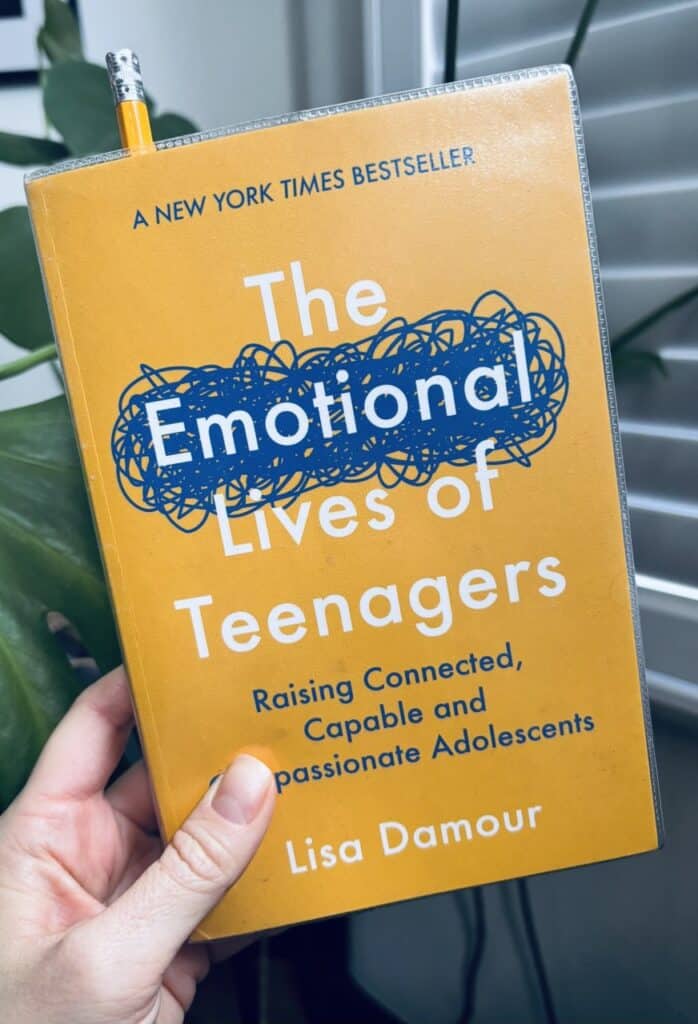
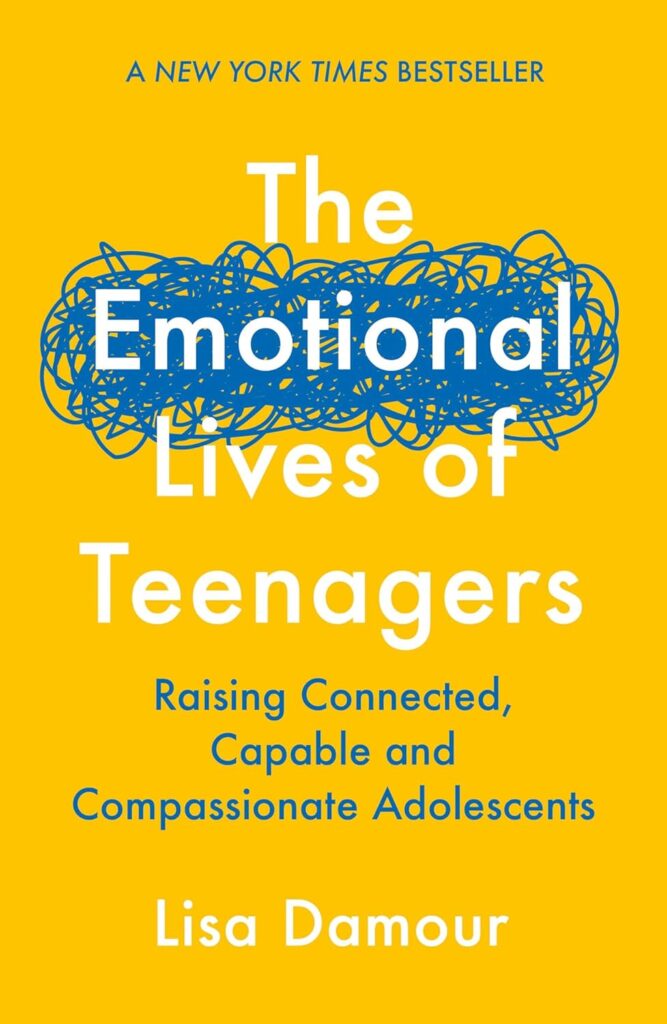
So I decided to educate myself and I added The Emotional Lives of Teenagers to my 2026 reading list. I listened to it first. Then I reread it and took notes.
It felt like a deep exhale.
This book dialed down my anxiety about my teenage sister and gave me a clear framework for what my own children will face. It reframes adolescence not as a crisis to survive, but as a critical stage of emotional growth.
And it isn’t just insightful, but also very practical – it gives you tools, language and perspective to help your teen thrive during adolescence.
In these notes, I’m sharing just a few key ideas. But honestly? Get the book. You’ll come back to it more than once.
Let’s dive in
Key Insights
Psychological Distress Is…Not Bad!
“Twenty years ago, I still felt myself to be part of a broader society that accepted, albeit begrudgingly, that painful feelings are a natural part of life. Today, I am trying to figure out how uncomfortable feelings came to be seen as psychological states that ought to be prevented or, failing that, banished as quickly as possible. […]
Since the time of my training, three trends have emerged that may help explain the shift in how we view psychological distress: the proliferation of effective psychiatric medications, the rise of the wellness industry, and the climbing numbers of young people who suffer from mental health disorders.”
This passage stopped me cold.
Somewhere along the way, we absorbed the idea that painful feelings are not just uncomfortable – they’re unacceptable. That sadness is a malfunction. That anxiety is an emergency. That frustration needs immediate elimination. We’ve been quietly conditioned to believe that distress must be fixed – urgently. And there is no shortage of industries ready to help us do exactly that.
But here’s the uncomfortable truth: painful feelings are not evidence that something has gone wrong. They are evidence that we are human. If we rush to medicate, distract, optimise or “hack” every difficult emotion out of existence, what are we teaching our children? That resilience is outsourced? That discomfort is dangerous?
Adolescence is not meant to be emotionally flat. It is meant to be intense – because growth always is. And as parents, our job is not to sterilise our children’s emotional world. It is to help them build the strength to move through it.
Teen Mood Swings: What’s Normal and When to Worry
“Normally developing teenagers experience pronounced highs and lows, but that is not, in and of itself, reason to be worried that they are falling apart. We can be confident in their overall emotional health so long as three things are true: Adolescents should have feelings that make sense in light of their circumstances; they should find adaptive ways to manage those emotions (such as having a good cry); and they should rely on a range of defenses that offer relief without distorting reality.”
This is the sanity-saving checklist every parent needs.
Keep this framework in your back pocket when the door slams or the tears come fast. It will stop you from catastrophising what is often completely normal.
And if something truly feels off – if emotions don’t match reality, coping turns destructive, or your instinct says something deeper is going on – that’s when you seek professional support.
The Truth About Teenage Emotional Life – Everything Parents Need to Know
“So far, what have we established about the emotional lives of our teenagers? First, their emotions provide valuable information and have a place at the decision-making table. Second, it is not our goal to protect adolescents from unwanted emotions, because those emotions play an important role in maturation. And third, adults shouldn’t mistake the extreme emotional intensity that is natural to adolescence for psychological fragility. Putting it all together, we want our teenagers to appreciate the input provided by their feelings, to know that uncomfortable experiences will help them grow, and to learn how to navigate their emotions effectively.”
This feels deeply reassuring. At a time when social media fuels anxiety about a “mental health crisis,” it’s easy to panic at every slammed door or tearful meltdown.
Our job isn’t to shield teens from discomfort. It’s to help them handle it.
It resonates a lot with Susan Davis ideas in her brilliant book Emotional Agility. In fact, this is a book that offers a wonderful framework for us, parents, to navigate our OWN emotions – definitely check it out.
Gender Differences in Teen Emotional Development: Myths vs Reality
“While boys outpace girls on physical aggression, it’s often assumed that girls make up the difference through relational aggression-the term used to describe cruel, but indirect, tactics such as spreading rumors or excluding or manipulating others.
This assumption, however, turns out to be a myth. Studies repeatedly show that boys and girls are in a dead heat when it comes to their use of relational aggression. Boys are not only more physically aggressive than girls, but they are also just as likely as their female classmates to be unkind in ways that aren’t physical.”
That finding alone challenges a deeply embedded stereotype.
Lisa Damour makes it clear: many of the emotional differences we see between boys and girls are less biological destiny and more cultural training. Boys are expected to be tough. Fathers, often unintentionally, speak less about feelings with their sons because vulnerability doesn’t fit the “manly” script. The result? Many boys don’t explode – they shut down.
And this is where parenting matters.
“Building the discussion of painful topics into the routines of family life matters because we know that what gets modeled at home makes a real difference.”
If emotions are welcomed at home, they become manageable in life.
Peers, meanwhile, enforce their own rules. Among girls, that can mean bonding through emotional sharing – which is powerful, until it tips into rumination. Now magnify that dynamic with group chats, screenshots, and social media that never sleeps.
That helps to understanding the pressures shaping boys and girls, so we can create homes where emotional strength looks like honesty, not silence, and processing doesn’t become self-inflicted pain.
P.S.: I highly recommend reading Hold On to Your Kids by Gabor Maté and Gordon Neufeld. In it, they introduce the concept of peer orientation – a powerful idea that explains why parental influence and presence matter far longer than most of us realise, especially during the teenage years.
Healthy Self-Esteem in Teens Prevents Bulling
“So how do we help our tweens and teens feel good about themselves through middle school? We don’t want our sons to torment girls because they’re feeling insecure, and we don’t want our daughters to lose confidence as a result of being harassed by boys. The best bet? Helping all teenagers develop a sturdy sense of self-worth.”
I remember the clash between boys and girls in my middle school, and I absolutely love this idea!
Imagine you’re a 12-year-old boy. The girls in your class suddenly seem taller, faster, stronger. Puberty has given them a head start. You’re left behind at PE. It stings. And sometimes, instead of admitting the sting, you try to level the field by knocking someone else down.
Now imagine something different.
You’ve worked hard at swimming. You know you’re good. So when someone outruns you, it doesn’t shatter you. Your confidence isn’t hanging on one comparison. It’s anchored in mastery.
That’s the difference self-esteem makes.
When a teen’s self-esteem is rooted in effort, skill, and earned competence, they don’t need to dim someone else’s light to feel bright. They can tolerate being outperformed. They can admire without collapsing.
If you want to dive deeper into the topic of self-esteem, check out my notes on The Six Pillars of Self Esteem by Nathaniel Branden and my article 10 Things Parents of Kids With High Self-Esteem Do.
Separation-Individuation: Why Your Teen Suddenly Finds You Embarrassing
“As I listened to Rachel and Mark’s description of life at home with Anna, it was clear that their daughter was well under way with the developmental phase that we psychologists refer to as separation-individuation. […] If I were tasked with renaming this developmental phase so as to capture how it really plays out in family life, I’d probably go with something like “When parents become totally mortifying,” or “The several months when your teenager can’t stand how you chew.”
This stage – separation-individuation – is a clinical term for something that feels anything but clinical at home. It’s the season when your once chatty, affectionate child suddenly finds you embarrassing. The way you dress. The way you talk. The way you exist.
“The bad news is that this rocky phase is an all but guaranteed aspect of adolescence. The better news is that understanding what’s behind behavior […] makes it easier to know how to respond.”
Here’s what’s happening.
Adolescents must build an identity separate from their parents. That’s the separation part. Then comes individuation – crafting a “personal brand” that feels entirely their own.
And this creates the ultimate parental paradox:
“As our teens are trying to become more separate, they are put off by our traits that don’t match their emerging brand. And simultaneously, their efforts to establish their own brand cause teens to be annoyed when one of our traits does match their new identity […] The sum of this equation? Everything we do is annoying.”
In the book, Damour shares the story of Anna, who asked her mum to change her “dumpy” outfit in front of friends. Painful? Yes. Personal? No. It’s developmental.
Which explains why my fiercely independent 10-year-old who proudly walks to school alone, suddenly pretends not to see me when I’m dropping off his younger brothers.
It stings. But now I see it differently – I’m not matching his brand of a cool independent kid.
How to Help Your Teen Manage Big Emotions
“It’s beyond our power to prevent or quickly banish our teens’ psychological pain, nor should that even be our goal. We can and should, however, help our teenagers develop ways to regulate their emotions that offer relief and do no harm.”
We cannot – and should not – try to eliminate our teenagers’ distress. What we can do is teach them how to handle that intensity without hurting themselves or others.
Lisa outlines two essential pillars of self-regulation:
First: help teens express difficult emotions in healthy ways.
Emotions need an outlet. Music (yes, even heavy metal), writing, talking to a parent or friend, punching a pillow, crying – these are pressure valves. The goal isn’t to suppress the feeling but to move it through the system.
Second: help them rein emotions back in.
Once expressed, feelings also need containment. Here are some coping strategies: going for a jog, doing sports, playing with a pet, drawing, meditating, getting absorbed in a novel, healthy distraction.
And then there are the fundamentals – the unglamorous but powerful basics: sleep, physical movement, real food. Even slow intentional breathing. These regulate the nervous system more effectively than most quick fixes ever will.
It’s also crucial to read the signals. Teens who are hurting themselves, lashing out, or numbing through substances, excessive gaming, or other forms of cheap dopamine are communicating something urgent: I’m overwhelmed, and I don’t know how to cope. That’s when you have to get professional help.
If you want to go deeper into the science of self-regulation, I highly recommend exploring Stuart Shanker’s work in Help Your Child Deal With Stress – And Thrive (check out our notes).
How to Give Advice to a Teen (Without Pushing Them Away)
“It’s extremely difficult for most teenagers (or adults, for that matter) to be open to advice until they feel that they’ve been heard out.”
I absolutely loved the chapter where Lisa talks about how to give advice to a teen. Sometimes all we need is to listen and then ask what our teen wants from us.
When a teen is venting, they’re not asking for a fix – they’re asking to be understood and “feel felt”. Advice lands only after empathy does. So before you offer solutions, listen. Reflect back what you hear – that’s called active listening:
“I bet you’re furious. Anyone would be irritated – and maybe worried about how this will play out.”
That emotional validation is what lowers the drawbridge. Even then – pause.
Before stepping into problem-solving mode, ask: “Do you want me to think this through with you?”
If they say no, respect it. You’ve already done something powerful: you’ve helped them process the feeling. You’ve shown you’re available. That alone builds trust.
If they say yes, resist the urge to take over.
Instead of handing them a solution, turn it into a thinking exercise. Break the situation into two buckets: what can’t be changed, and what can.
Stuck with an annoying group member? That might be unavoidable. But how the work gets divided? How accountability is handled? How they respond to bossy behaviour? That’s negotiable.
Help them focus their energy where it has leverage. Brainstorm together. Offer suggestions lightly, as invitations rather than verdicts:
“Would it help to set checkpoints so everyone shows their progress? Might that keep things on track?”
Be a coach to your child and help them practice problem-solving skills.
Action Steps For You
1. Pause Before You Panic: Become Your Teen’s Emotion Translator
When your teen’s emotions spike, resist the urge to fix and instead run a quick mental checklist: does this reaction make sense given what’s happening in their life? Are they coping in mostly healthy ways like talking, crying, writing, or moving their body? Are they staying grounded in reality rather than spiralling into self-harm, substances, or total withdrawal? If the answers are mostly yes, your role is to stay steady – listen, name the feeling, and teach them coping skills. But if emotions don’t match reality or coping turns destructive, that’s your cue to seek professional support.
2. Help Your Child Build Healthy Self-Esteem Rooted in Mastery
Encourage your teen to develop skills they’ve worked hard for, whether that’s sport, music, coding, art, or academics. When confidence is rooted in effort and mastery, they can tolerate losing, being outperformed, or not being the best – without collapsing or needing to dim someone else’s light. Focus on helping them develop growth mindset.
3. Practice active listening:
Teenagers are rarely open to solutions until they feel heard, so connection must come before correction. When your teen vents, reflect what you hear and name the emotion – “That sounds really frustrating,” or “I can see why that hurt” – then pause and ask, “Do you want me to think this through with you?” If they say no, respect it; you’ve already strengthened trust. If they say yes, coach instead of rescue by helping them think through what they can and cannot control.
Quotes From The Book:
“Emotional pain promotes maturation. This is true when it is inspired by arts and literature, and likely even more true when it comes from difficult personal experiences.”
“If we really want boys to express sadness, fear, apprehension, or any other emotion that might leave them feeling exposed, they need to see that the adult men in their lives are doing the same, be it their own father or any other men they respect.”
“Girls become more inclined to talk about their feelings, while boys become more prone to managing emotional pain by closing down and relying only on themselves.”
“Distress comes with being human, and it certainly comes with being a teenager dealing with the challenges and disappointments that are part of growing up. When our teens become upset, our goal should be to help them manage their emotions well.”
“Research shows that most adolescents like their parents and want to connect with us. In fact, a complaint that I often hear from teens is that when they do want to talk-even during normal business hours-it can be hard to get our attention.”
“Research shows that being able to take an interest in your teen’s emotional turmoil and respond to it supportively provides immediate psychological comfort and can also protect adolescents against more significant psychological concerns down the line.”