
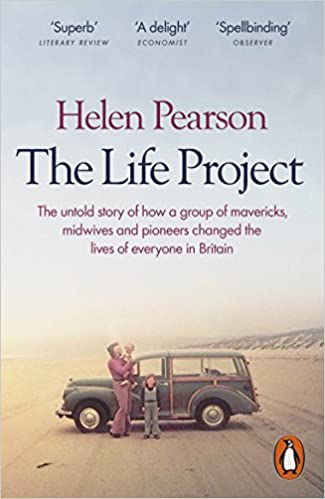
About Helen Pearson
Helen Pearson is a Chief Magazine Editor for Nature, the word’s leading science journal. She is also a journalist and science communicator. Her stories have won accolades including the 2010 Wistar Institute Science Journalism award and two best feature awards from the Association of British Science Writers. She has a PhD in genetics and lives near London with her partner and three children.
About The Book
“This book is about the British birth cohort studies, a remarkable series of longitudinal studies that track generations of babies from birth to death. The cohorts span over seventy years of British and scientific history, have generated a vast range of books and articles across many disciplines, and have involved hundreds of scientists.”
I picked up this book after watching Helen Pearson’s TED talk Lessons from the Longest Study on Human Development (I strongly recommend watching it):
When we moved to the UK, our view of healthcare, education, and social care shifted dramatically. Coming from Eastern Europe, where systems work quite differently, we found ourselves constantly asking why: Why is maternal care organized this way? Why do some children receive 30 hours of free childcare while others only 15? Why are antibiotics only available with a prescription? For almost every question, there was a research-based explanation. And this book helps uncover where many of those answers come from.
In The Life Project, Helen Pearson tells the story of an extraordinary scientific project: in March 1946, British scientists began following the lives of thousands of babies born in a single week. What started as a modest study became the world’s longest-running exploration of human development, eventually spanning five generations. These longitudinal “cohort studies” have revealed profound insights into how social class, parenting, education, and health shape our lives. One striking finding: while poverty has lasting effects, good parenting can halve the gap between rich and poor.
The five cohort studies – tracking over 70,000 people – have generated more than 5,000 academic papers and 40 books. They function as a kind of natural experiment, allowing researchers to see how political, economic, and social changes ripple through people’s lives. If you’ve ever heard the phrase “British scientists found…” this book reveals the foundation of much of that knowledge and why it matters.
I personally enjoyed the book and can’t wait to share my favourite insights with you.
Let’s jump straight in.
Key Insights
The Cohort Studies
The first study began in 1946, where the researchers, led by Dr Douglas, collected data on the babies born around the UK within a single week in March (5,362 babies). The project grew out of earlier discussions in 1936 about Britain’s declining birth rate, with the initial goal of understanding why families were having fewer children. One of its most striking findings was the role of social class in shaping outcomes: babies born to poor families were 70% more likely to be stillborn than those born to mothers in the most prosperous class. This evidence directly influenced government policy, leading to the introduction of free maternal care in hospitals.
By 1957, the same children faced the nationwide 11+ exams, designed to provide equal opportunities in education. Yet Douglas’s analysis revealed a harsh reality: children from poorer backgrounds consistently performed worse than their wealthier peers. The conclusion was stark – many disadvantaged children seemed “born to fail.” From this point, the study began to focus more deeply on social science.
In 1958, the second cohort was launched, this time with a great focus on epidemiology. It revealed the harmful effects of smoking and drinking alcohol during pregnancy, and the benefits of breastfeeding. When the children were reassessed at age 14, the data showed that, regardless of class, those born to smoking mothers were shorter, scored lower on intelligence tests, achieved fewer educational qualifications, and were more likely to be obese. The research also confirmed that breastfed children generally tend to have better health, and that nutrition during pregnancy and early childhood had profound, long-term effects. Poor nutrition was linked to low birth weight, weaker hearts, and poorer cognitive outcomes.
The impact of these discoveries persuaded both scientists and policymakers of the value of such studies, despite their enormous cost. As a result, new cohorts were launched in 1970, 1991, and 2000. Together, they offered a broader perspective on how social, economic, medical, and environmental changes – including shifts in lifestyle, technology, and pollution – shaped people’s lives over time.
Across all cohorts, one theme kept resurfacing: social inequality. Children from disadvantaged backgrounds were consistently less likely to succeed in school or work, more likely to struggle with physical and mental health, and 60% more likely to die before the age of sixty.
Parenting Matters – How Disadvantaged Children Succeeded in Life
“Children living in persistent poverty were falling behind those who were better off from an early age, but good parenting appeared to offset the disadvantage to some extent.”
Researchers knew that not all children who were “born to fail” would actually do so. To understand why, they looked closely at 386 cohort members born into the most difficult circumstances and identified 83 “achievers” – those who managed to thrive despite their disadvantaged start. The goal was to find out what helped them succeed.
So here are the key points:
- “First, typical achievers had parents who were interested in their child’s education and who had aspirations for their child’s future.”
- “As well as ambitious parents, the achievers were likely to have had an ambitious school behind them”
- “A typical achiever was also less likely to have difficulties at home, such as a sick parent, an unemployed father or separated parents”
- “A typical achiever was more likely to want to complete their schoolwork and continue in education – and they were often determined to escape into better circumstances than they had experienced as a child.”
In other words, the “magic formula” was a child’s internal drive for a better life, supported by parents who held high expectations and invested in their education.
In 2006, economist Blanden carried out a detailed analysis of the 1970 cohort to understand what enabled disadvantaged children to succeed in education later in life. His conclusion was clear: parental engagement in the early years matters more than anything else. He found that children whose parents regularly read to them at age five and showed interest in their education at age ten were far less likely to be poor by the time they reached thirty.
Support in later years also makes a difference.
Pearson shared another study that tracked 3,000 children from the age of three, focusing on best practices in early childhood. The results were striking: what parents did at home to create a rich learning environment mattered more for children’s intellectual and social development than their parents’ job, education, or income.
“Reading with a child, teaching them songs and nursery rhymes, painting and drawing, showing them the alphabet and numbers, visiting the library, taking children on trips and visits – all of these were associated with higher intellectual, social and behavioural scores as the children grew up.”
What else can you do? Talk to your children about what they are learning at school, support them with homework, express ambitions towards their future – that’s all associated with improved academic achievement.
The Millennium Cohort Studies added more evidence: children benefit when parents talk and listen to them, respond warmly, keep regular mealtimes and bedtimes, and use authoritative discipline.
This aligns with the principles of Wise Parenting – what most psychologists call the authoritative parenting style – being both demanding and supportive, firm yet warm. In Grit, Angela Duckworth describes this as the optimal parenting style for raising resilient children. Her research shows that grit – the ability to persist through challenges – is a key ingredient of success.
Routine also plays a crucial role. One Millennium Cohort study found that children with regular bedtimes displayed better behaviour. The scientists explained why:
“Disrupted sleep is thought to upset the brain’s innate 24-hour clock, leaving children in a state much like perpetual jet lag, which interferes with the working of their brains and messes with their behavior.”
So, routines don’t just help children thrive, they also make life easier for parents.
Self-control in Childhood Predicts Success in Adulthood
One of the most fascinating research findings is that self-control in childhood predicts success later in life.
Remember the famous marshmallow test conducted in the 1960s by Stanford professor Walter Mischel? Preschoolers were given one marshmallow (or another treat) and told they could either eat it immediately or wait up to twenty minutes to receive two treats instead.
If you haven’t seen it, there’s a great video on YouTube capturing kids’ hilarious reactions to the marshmallow challenge.
When researchers later followed up with these children, they discovered that those who had exercised more self-control in the experiment tended to perform better on college entrance exams, developed stronger coping strategies for stress, and even had lower body mass indexes.
More recently, data from the 1958 and 1970 cohort studies allowed scientists to measure children’s self-control at ages seven and eleven. The results were striking: children with poor self-control were more likely to suffer from poor health as adults, while those with high self-control were more likely to achieve higher socioeconomic status and move into managerial roles. The conclusion? “Patience and perseverance are such a crucial predictor of success in life that they should be taught from a young age.”
As Pearson puts it:
“It all adds up to the growing realization that when it comes to finding happiness, health and wealth in life, it really helps to build social and emotional skills, as well as intellectual ones. Success at many jobs and life challenges requires people to be diligent, reliable and to get the job done, rather than having bountiful raw intelligence.”
Cannot agree more on this!
It also resonates with Nathaniel Branden – in The Six Pillars of Self-Esteem he writes that self-discipline and delaying gratification are the two hallmarks of psychological health:
“No one can feel competent to cope with the challenges of life who is without the capacity for self-discipline. Self-discipline requires the ability to defer immediate gratification in the service of a remote goal. This is the ability to project consequences into the future—to think, plan, and live long-range.”
Action Steps For You:
- Prioritize the fundamentals. Healthy eating, regular movement, and quality sleep are the foundation of health, wellbeing, and long-term success for both you and your children.
- Practice Wise Parenting. Being both demanding and supportive matters more than almost anything else. Love your children unconditionally, read to them, create a rich learning environment, be present, listen, and show genuine interest in their world. Express high expectations and aspirations for their education and future while also giving them meaningful challenges to grow.
- Teach self-control early. Self-discipline, willpower, and grit are lifelong success skills. Start nurturing them from the earliest years, but remember, it’s never too late to strengthen them in yourself or your children.
Quotes From The Book
“The children born into the most disadvantaged circumstances – the ones with poor parents and cramped homes – tended to have difficult lives from that point on, gradually racking up behavioral problems, illness and poor results at school.”
“[the cohort studies] showed that our growth and development in the womb can affect our risks of disease decades down the line – and even how long we are likely to survive.”
“Parents offer the first and strongest buffer against disadvantage.”
“With enough motivation and support, people can step up at any time during their lives, and no one need to be consigned irrevocably to a trajectory of disadvantage.”
“The motivation to parent children well seems to be as important as the exact methods by which it is curried out.”
“Inspiring them, taking them out and spending time with them may ultimately be more productive than sinking energy into moving to the catchment area for the particular school.”